
-
Activities
- The 'New Extensionist'
- Global Good Practice Initiative
- Last Mile Programme
- Experience Capitalisation
- ÆRAS Project
- Knowledge
- Library
- Global Good Practice Notes
- Nutrition-Library
- RAS Policy Compendium
- Extension Provider Directory
- New Extensionist Learning Kit NELK
- Extension Training Directory
- World Wide Extension Study
- RAS Blogs
- Community
- GFRAS Facebook Group
- Regional Networks
- Country Fora
- Affiliates
- Working Groups
- Roster of Experts
- GFRAS Update
- Community Area New
- About us
- Mission & Fields of action
- Context & Background
- Stakeholders
- Governance
- Staff
- Jobs
- Privacy Policy
- Partners
- Assistance
-
Activities
- The 'New Extensionist'
- Global Good Practice Initiative
- Last Mile Programme
- Experience Capitalisation
- ÆRAS Project
- Knowledge
- Library
- Global Good Practice Notes
- Nutrition-Library
- RAS Policy Compendium
- Extension Provider Directory
- New Extensionist Learning Kit NELK
- Extension Training Directory
- World Wide Extension Study
- RAS Blogs
- Community
All Categories
- Home /
- All downloads
Cadre stratégique 2016-2025 du Forum mondial pour le conseil rural Version:2015Downloads:5848Date:27 May 2016Show detailsX
Cadre stratégique 2016-2025 du Forum mondial pour le conseil rural
 Le présent cadre stratégique a été établi au terme d’une série d’évaluations de la demande, de consultations par voie électronique, de discussions tenues par le comité directeur du GFRAS et de contributions d’experts (voir Annexe C pour plus de précisions).
 Le document définit les domaines d’action stratégiques à trois niveaux (l’environnement favorable, l’institution/l’organisation et l’individu) en utilisant les systèmes d’innovation agricole ainsi que le cadre de renforcement des capacités. Les activités menées dans chaque domaine stratégique permettront de renforcer les capacités des services de conseil rural, d’atteindre la vision et d’accomplir la mission du GFRAS. Des résultats stratégiques majeurs (changements de comportement) auxquels le GFRAS contribuera sont attendus de chaque domaine stratégique.
Successful Training Technique: Bamboo Made Bio Intensive Raised BedsVersion:2016Downloads:5713Date:19 May 2016Show detailsXSuccessful Training Technique: Bamboo Made Bio Intensive Raised Beds
A success story with use of local resources to make farming profitable . Maintaining soil health is to be the main aim of a farmer and in that regard Bamboo made bio intensive raised beds plays a vital role to provide good food and help us in profitable farming .
 Enterprising the Farmer Entrepreneur (A case study of Manipur, India)Version:2015Downloads:10057Date:14 May 2016Show detailsX
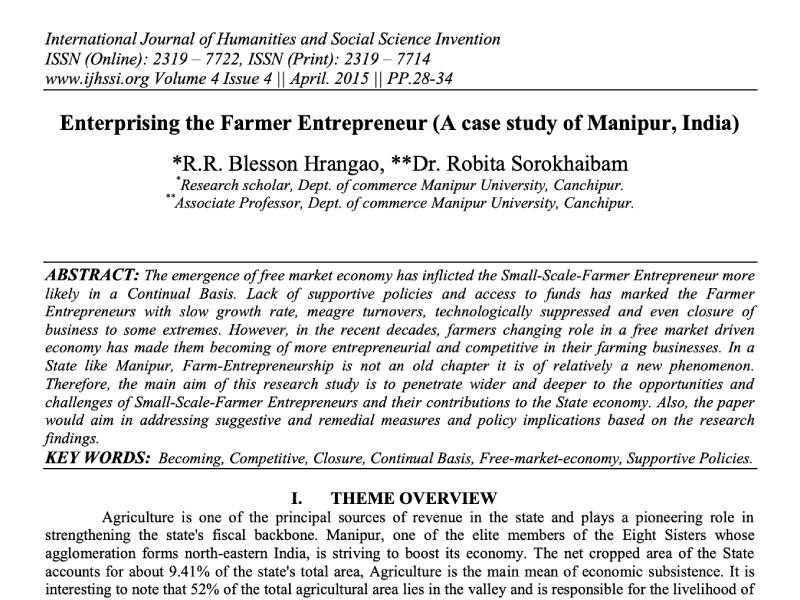
Enterprising the Farmer Entrepreneur (A case study of Manipur, India)
In the recent decades, farmers' changing role in a free market driven economy has made them more entrepreneurial and competitive in their farming businesses. In a State like Manipur, India, Farm-Entrepreneurship is not an old chapter it is of relatively a new phenomenon. Therefore, the main aim of this research study is to penetrate wider and deeper to the opportunities and challenges of Small-Scale-Farmer Entrepreneurs and their contributions to the State economy. Also, the paper attempts to address suggestive and remedial measures and policy implications based on the research findings.
 The Journey of an agripreneur in Assam , IndiaVersion:2016Downloads:8035Date:12 May 2016Show detailsX
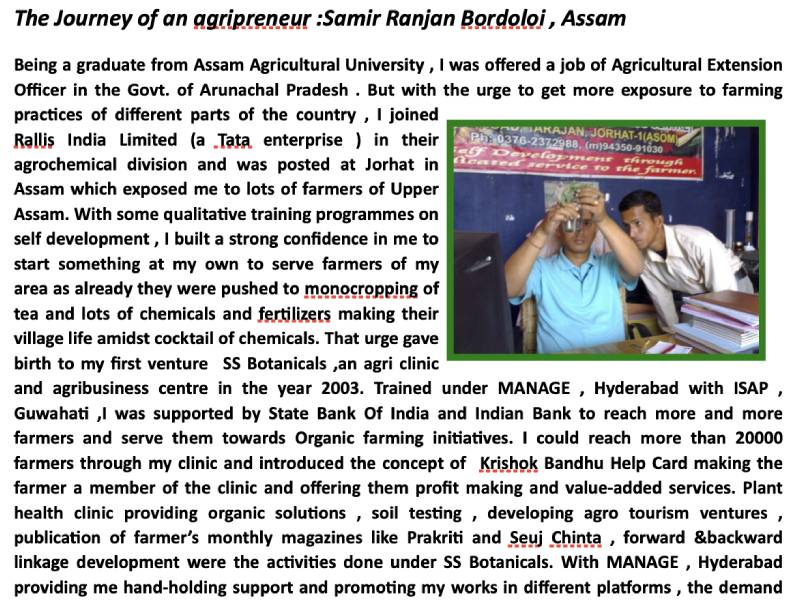
The Journey of an agripreneur in Assam , India
Promoting organic farming in the region and creating income generating model for young farmers of the Northeast India narrates on the journey with ups and downs till date .
Farmer Field Schools Guidance DocumentVersion:2016Downloads:13250Date:10 May 2016Show detailsXFarmer Field Schools Guidance Document
Since the development of the farmer field school (FFS) approach in the late 80s in Asia, thousands of FFS have since been implemented across the world, in over 90 countries and across a varied range of contexts and thematic areas. Demand for FFS programmes is increasing, and in several countries the approach is now institutionalized within public extension systems and NGO programmes. It is estimated that by 2015 millions of farmers and agro-pastoralists had benefitted from the unique ability of FFS programmes to address the technological, social and economic needs of smallholder farmers and land users.
Considering the expansion of FFS, both in terms of scale and in the application of the approach, concerns have emerged around how to best ensure a minimum level of quality of FFS program implementation and harmonization across programmes and actors, while still maintaining the flexibility required for the continuous adaptation and improvement of the approach.
Young ICT entrepreneurs overcoming challenges and transforming agricultureVersion:2016Downloads:4510Date:10 May 2016Show detailsXYoung ICT entrepreneurs overcoming challenges and transforming agriculture
 The booklet presents 20 ICT-enabled entrepreneurial ventures created by young innovators from African and Caribbean countries. The innovations feature the use of mobile phones, social media, websites and a new generation of tractors. The young innovators featured in this publication are role models who can inspire others and encourage them to innovate for agriculture. Their stories are a testimony of how young people are already contributing to transforming agricultural value chains through their innovations. They demonstrate that these types of efforts can contribute to increasing employment, and fostering food and nutrition security. A key message that comes out from these stories is the need for all stakeholders to develop holistic strategies that can build youth agribusiness capacities and advance this novel type of agro-entrepreneurship.Principles of Portal DesignVersion:2006Downloads:9487Date:09 May 2016Show detailsX
Principles of Portal Design
 Sound structural design is as important to portals as it is to buildings. The interface is a user’s introduction to the portal. It is also the key to accessing the content and services provided by the portal. As we design and deploy portals we should consider how to organize information and applications in a way that makes sense to users. This of course is a problem for several reasons. First, there are many users and their needs vary. Second, how even a single user uses the portal depends on the task he or she is trying to accomplish. If performing a routine task, for example, entering a time card, the user will want rapid access to the application. This is no place for needless clicks through a hierarchical set of applications. On the other hand, if the user is researching a new product line, he or she will want to browse through related content, follow promising paths of related information, and quickly narrow the search in response to hunches about new angles on the problem. The only way to meet these needs is to provide multiple ways to navigate and to keep the overall organization consistent.
Content within pages should follow a pattern. The three-panel model balances formal structure with flexible organization of content. Landmarks, activ links, and other navigation techniques will help users quickly move around within the portal.
 Farmers as Entrepreneurs: Developing Competitive SkillsVersion:2012Downloads:9837Date:02 May 2016Show detailsX
Farmers as Entrepreneurs: Developing Competitive Skills
The purpose of this guide is to provide a better understanding of the concept and practice of entrepreneurship. With this understanding it is hoped that extension workers will be better able to help farmers develop the skills and spirit of an entrepreneur. It is part of a series of booklets on farm business management designed to help extension workers support farmers.What is presented in this guide can be applied to people who want to start a farm business for the first time and to farmers who are already running a farm business.There are also many newcomers (young and old, male and female) entering farming who are starting with their first farming enterprise. This guide can help extension workers help all of these potential farmer-entrepreneurs.
„ახალი ექსტენციონისტი“: სტრატეგია, ფუნქციები და შესაძლებლობები ექსტენციისა და საკონსულტაციო მომსახურების გასაძლიერებლადDownloads:10310Date:02 May 2016Show detailsX„ახალი ექსტენციონისტი“: სტრატეგია, ფუნქციები და შესაძლებლობები ექსტენციისა და საკონსულტაციო მომსახურების გასაძლიერებლად
 უკანასკნელ პერიოდში აქტიურად განიხილება სოფლად ექსტენციისა და საკონსულტაციო მომსახურების გაძლიერება, მაგრამ ამისათვის საჭირო შესაძლებლობების განვითარებაზე ბევრი რამ ცნობილი არაა. ასევე ბევრი არ არის ცნობილი ექსტენციისა და საკონსულტაციო მომსახურების (EAS) როლზე აგრარულ ინოვაციურ სისტემებში (AIS) მოცემული დოკუმენტის მიზანია აღნიშნული პრობლემური საკითხების შესახებ ცოდნის გაღრმავება აგრარულ ინოვაციებთან დაკავშირებული ახლებური ხედვის ჩამოყალიბების საშუალებით ექსტენციისა და საკონსულტაციო მომსახურების მიმართ, რასაც ჩვენ დავარქვით „ახალი ექსტენციონისტი“.
 Correlates of successful agripreneurship: A study of awardee farmers of Tamil NaduVersion:2012Downloads:3875Date:29 April 2016Show detailsX
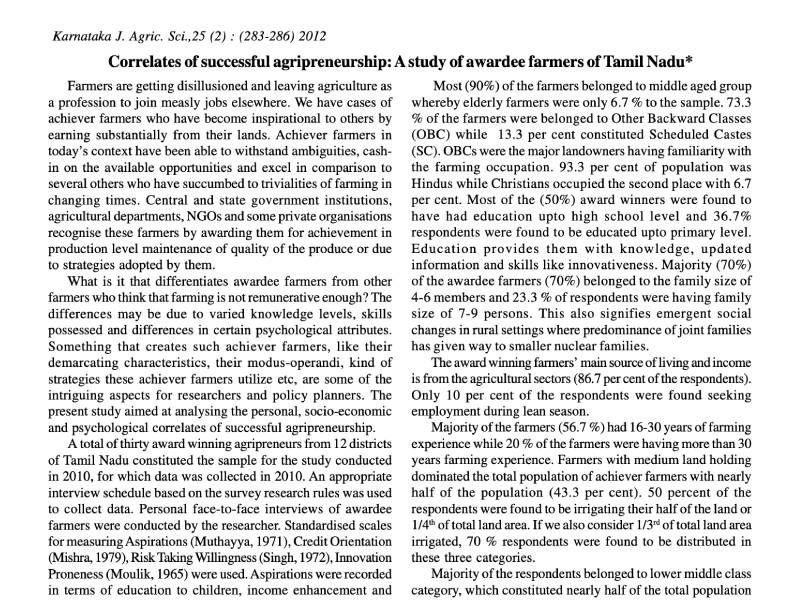
Correlates of successful agripreneurship: A study of awardee farmers of Tamil Nadu
What is it that differentiates awardee farmers from other farmers who think that farming is not remunerative enough? The differences may be due to varied knowledge levels, skills possessed and differences in certain psychological attributes. Something that creates such achiever farmers, like their demarcating characteristics, their modus-operandi, kind of strategies these achiever farmers utilize etc, are some of the intriguing aspects for researchers and policy planners. This study, therefore, has analysied the personal, socio-economic and psychological correlates of successful agripreneurship.
Agripreneurship as a tool for upliftment of AgricultureVersion:2014Downloads:4075Date:29 April 2016Show detailsXAgripreneurship as a tool for upliftment of Agriculture
Agripreneurship has potential to generate growth, diversifying income, providing widespread employment and entrepreneurial opportunities in rural areas.This paper, thus, mainly focused on basic concepts of agripreneurship, entrepreneurship skills, and needs of agripreneurship development in India along with major reason for promoting agripreneurship development in country.
 Rural development through Agripreneurship: A study of farmers in Uttar PradeshVersion:2015Downloads:8648Date:29 April 2016Show detailsX
Rural development through Agripreneurship: A study of farmers in Uttar Pradesh
This research paper identifies and analyze the economic and social perspective which work as a barrier in the development of entrepreneurial skills in the farming sector of Uttar Pradesh in India and studying the implications of the Pieter de Wolf and Hermann model.The nine key general entrepreneurial skills for farmer as an entrepreneur are taking initiative, ambitious, focused, problem-solving, creative thinkers, taking risks, flexibility and adaptability, interpersonal abilities, networking and readiness to learn. The following methods is adapted from Edward De Bono‘s Lateral Thinking Principles (1990) and is applied to highlight the difference between the ―Agricultural‖ of current approaches to art of Agripreneurship education which is needed and exploring the entrepreneurship and management skills through the Pieter de Wolf and Hermann Schoorlemmer model.
 Development of agriculture in India through agripreneursVersion:2015Downloads:26820Date:29 April 2016Show detailsX
Development of agriculture in India through agripreneurs
The study is intended to find out the role of Agripreneurs in agriculture development in India. In developing countries like India forraising the living standard of the vast majority of the backward regions, planning and implementation for development of entrepreneurial programmes are essential because of their over-dependence on agriculture for employment Thus entrepreneurship development in rural industries appears to be the best potential alternative to find employment avenues for the rural population. The importance of entrepreneurship development in agricultural sector and business planning for agricultural firms-from input traders to producers to processors and the steps required to prepare a thorough business plan.
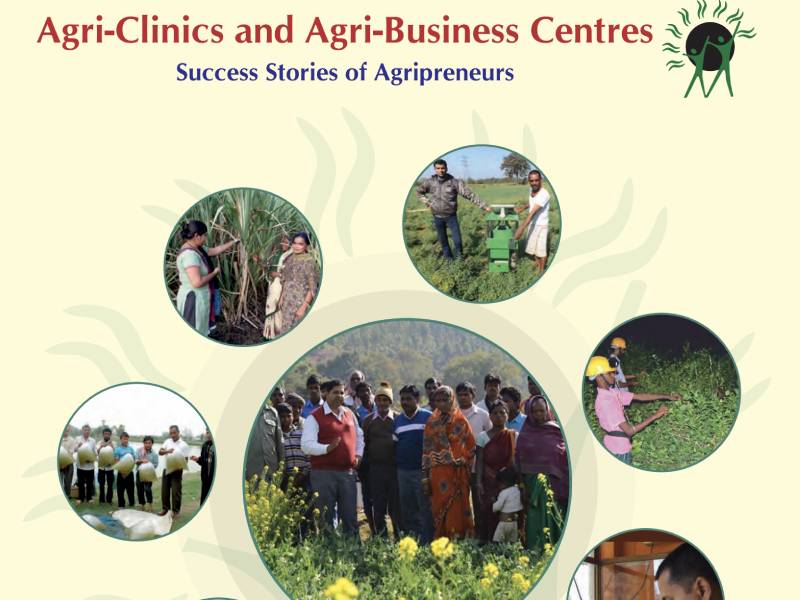 Success stories of AgripreneursVersion:2014Downloads:4177Date:29 April 2016Show detailsX
Success stories of Agripreneurs
Many success stories of Agripreneurs have been reported from different Sectors and States in India, signifying their growing importance in Agricultural Extension and their national presence. These success stories have been circulated among stakeholders through monthly e-Bulletin ‘Agripreneur’ of MANAGE. This book is a compilation of some handpicked success stories. This book will enhance the awareness of the stakeholders such as State Agricultural Universities, Banks, NABARD, KrishiVigyanKendras(KVKs) and ATMAs about the potential of Central Sector Scheme of Agri-Clinics and Agri-Business Centres (AC&ABC)Scheme in strengthening Agricultural Extension.
 Agri-Preneurs: A Case Study of Dharmapuri FarmersVersion:2013Downloads:8061Date:29 April 2016Show detailsX
Agri-Preneurs: A Case Study of Dharmapuri Farmers
In Dharmapuri, Karimnagar District of Andhra Pradesh in India, farmers came forward to start their own associations to meet their problems without government intervention. This paper focuses on the farmers those who became entrepreneurs to Agri-preneurs, studies about the profile of agricultural entrepreneurs i.e. agri-preneurs and their socio cultural background in Dharmapuri in Andhra Pradesh.
© GFRAS 2026, Global Forum for Rural Advisory Services.
Site by Joomla Experts