
-
Quienes Somos
- Misión & Campos estratégicos
- Historia
- Actores
- Gobernanza
- Colaboradores
- Descargar
- Oportunidades
- Partners
- Actividados
- Reuniones Anuales
- The 'New Extensionist'
- Políticas para Extensión y SAR
- Global Good Practices
- TIC en Servicios de Asesoría Rural
- Nutricion y SAR
- Organizaciones de Productores de SCA
- Igualdad de Género en SAR
- Iniciativa de Evaluación
- Conocimientos
- Publicaciónes del GFRAS
- Global Good Practices
- RAS Policy Compendium
- New Extensionist Learning Kit NELK
- Directorio Proveedores Extensión
- Estudio Mundial de Extensión
- Todos los documentos
- Community Area New
- Comunidad
- Eventos
-
Quienes Somos
- Misión & Campos estratégicos
- Historia
- Actores
- Gobernanza
- Colaboradores
- Descargar
- Oportunidades
- Partners
- Actividados
- Reuniones Anuales
- The 'New Extensionist'
- Políticas para Extensión y SAR
- Global Good Practices
- TIC en Servicios de Asesoría Rural
- Nutricion y SAR
- Organizaciones de Productores de SCA
- Igualdad de Género en SAR
- Iniciativa de Evaluación
- Conocimientos
- Publicaciónes del GFRAS
- Global Good Practices
- RAS Policy Compendium
- New Extensionist Learning Kit NELK
- Directorio Proveedores Extensión
- Estudio Mundial de Extensión
- Todos los documentos
- Community Area New
- Comunidad
All Categories
- Inicio /
- All downloads
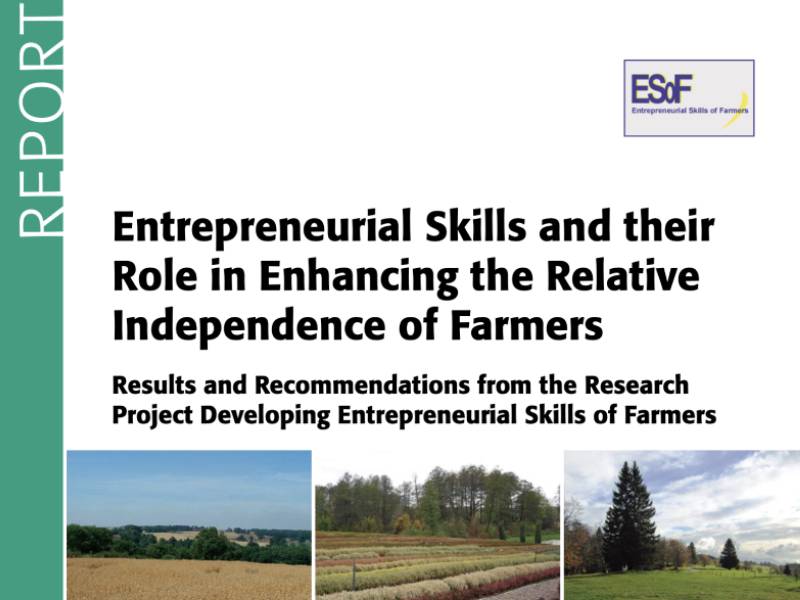 Entrepreneurial Skills and their Role in Enhancing the Relative Independence of FarmersVersion:2008Downloads:4045Date:18 Julio 2016
 Collective Entrepreneurship in Agriculture and its Contribution to Sustainable Rural Development in GreeceVersion:2011Downloads:2951Date:18 Julio 2016Show detailsX
Collective Entrepreneurship in Agriculture and its Contribution to Sustainable Rural Development in Greece
Abstract: Agricultural Cooperatives, as member-owned and controlled agribusiness enterprises traditionally play an important role in upgrading the socio-economic status of their members and local Communities. However, in Greece, the majority of Agricultural Cooperatives face severe financial problems, which undermine their existence. In order to surpass this situation, they have sought means of enhancing their business dimension using more competitive forms of collaboration. These include alternative forms of collective entrepreneurship associated with the transformation of “Traditional Cooperatives” into “New Generation Cooperatives”, which under appropriate conditions can ensure their development and their members’ welfare. The typology developed in the present paper presents distinct patterns of collective entrepreneurship in which the traditional cooperative and the private enterprise are the extreme poles. The typology presented allows the comparison of alternative forms of collective entrepreneurship in the light of a threedimensional balance between economic development, environmental protection and social equity.
 Role of farmer training and personal characteristics on agripreneurship among small scale farmers in Trans-Nzoia east sub-county, KenyaVersion:2016Downloads:4213Date:18 Julio 2016Show detailsX
Role of farmer training and personal characteristics on agripreneurship among small scale farmers in Trans-Nzoia east sub-county, Kenya
The agriculture sector around the world has experienced profound changes in recent years. The ability and propensity of farmers to engage in entrepreneurial behaviours is a key explanation of the different patterns of responses within the sector. Lack of business opportunities and insufficient income in rural areas have encouraged developing countries to consider new strategies such as creating job opportunities and enhancing rural livelihood. To meet this challenge, entrepreneurship strategy as a new paradigm has been proposed by many countries. The study aimed to explore determinants of agripreneurship in Trans Nzoia East sub County with a focus on small scale farmers. The objectives of the study were to explore the contribution of farmer training, the role of financial support, the influence of individual farmer characteristics, and the role of market access to agripreneurship among small scale farmers in Trans-Nzoia East Sub-County. The study adopted quantitative and qualitative exploratory research design. The population of this study was determined by getting a list of small scale farmers in the sub County that were registered in e-extension database at the Ministry of Agriculture County records. Simple random sampling method was used to select 65 small scale farmers which were 10% of the target population of 650 farmers in Trans Nzoia East sub-County, obtained from a sampling frame. The study used a questionnaire as the instrument for data collection. Data collected was analysed by chi square at 0.05 confidence level and spearman’s parametric correlation. Further, a computer statistical package for social sciences (SPSS) was used in entering and analysing the data.
Common Framework on Capacity Development for Agricultural Innovation Systems Show detailsX
Common Framework on Capacity Development for Agricultural Innovation Systems
The 41 partners of the Tropical Agricultural Platform agreed to develop a Common Framework on Capacity Development for Agricultural Innovation Systems (CD for AIS). The objective of the TAP Common Framework is to harmonize and coordinate the different approaches to CD in support of agricultural innovation. Such harmonization would promote optimal use of the resources of different donors and technical cooperation agencies. The development and thus the validation of the Common Framework is supported by the Capacity Development for Agricultural Innovation Systems (CDAIS) project, funded by the European Commission (EC) and jointly implemented by the European agricultural research alliance AGRINATURA and the Food and Agriculture Organization of the United Nations (FAO). The present volume “Guidance Note on Operationalization” complements the volume “Conceptual Background”. The “Synthesis Document”, separately published for ease of consultation, summarizes the content of both volumes.
Fruit comestible de la forêtVersion:Juin 2016Downloads:4933Date:12 Julio 2016Show detailsXFruit comestible de la forêt
Fruit d'un mythique arbre de la savane, le cordylla pinata ou ‘’Dugura’’ produit des fruits,’’ Dugura mô’’, très appréciés constituant une véritable alternative à certaines féroces envies de viande. Fruit des débuts de saisons pluvieuses, le’’ Dugura sogo’’ sert dans plus d'un cas de pont entre les vivres à récolter et les anciennes provisions largement entamées depuis la précédente moisson. Autrement dit, ‘’Dugura mô’’ est le fruit par excellence de la période de soudure.The Traditional Knowledge AdvantageDownloads:9060Date:13 Junio 2016Show detailsXThe Traditional Knowledge Advantage
While Indigenous people are generally depicted as victims of poverty and vulnerability to climate change, it would also be appropriate to emphasize their sensitivity to the environment, adaptive capacity and resilience, as manifested by their ability to modify their behaviour in response to changing climatic conditions. Indigenous peoples’ knowledge can provide important insights into the processes of observation, adaptation and mitigation of climate change consequences.
Gender and Inclusion Toolbox: Participatory Research in Climate Change and AgricultureDownloads:6164Date:13 Junio 2016Show detailsXGender and Inclusion Toolbox: Participatory Research in Climate Change and Agriculture
This manual is a resource and toolbox for NGO practitioners and programme designers interested in diagnostic and action research for gender sensitive and socially inclusive climate change programmes in the rural development context. It is meant to be an easy to use manual, increasing the research capacity, skills and knowledge of its users. Integrating gender and social differentiation frameworks should ideally begin from the start of the programme cycle and be coordinated throughout research, design, implementation, and monitoring and evaluation phases. The data gathered using this toolbox supports this programme work.
New Extensionist Learning Kit: List of Modules and Competencies RequiredVersion:2016Downloads:4737Date:07 Junio 2016Show detailsXNew Extensionist Learning Kit: List of Modules and Competencies Required
New Extensionist Learning Kit: List of Modules and Competencies Required
Mobilizing the potential of rural and agricultural extensionVersion:2010Downloads:5018Date:03 Junio 2016Show detailsXMobilizing the potential of rural and agricultural extension
 This paper presents an overview of current opportunities and challenges facing efforts to increase the impact of rural and agricultural extension. The starting point for this analysis is in recognition that the days when agricultural extension was synonymous with the work of public sector agencies are over. The ‘extension services’ described here may just as likely consist of an input vendor advising a farmer about what seed to plant, a television station broadcasting a weather forecast, a supermarket advising traders about what standards are required for the vegetables they purchase or a farmer organization lobbying for research that refl ects the demands of its members for new technologies. Mobilizing the potential of extension is about enhancing this broad and complex fl ow of information and advice in the agrifood sector. The ideas presented here describe how extension systems can contribute to the improvement of the profi tability, sustainability and equity of smallholder agriculture within broader innovation systems. This paper outlines the potential role of extension in achieving the aims of the L’Aquila Food Security Initiative, which has mobilized a massive international commitment to enhancing food security. Effective extension systems are a precondition but not a guarantee that these aims can be achieved. Extension will only be effective if other services are in place, if research is focused on the problems facing farmers, if markets and land are accessible and if there is suffi cient social, political and economic security in place to create an enabling environment for rural development. Extension is part of agricultural knowledge and information systems, which are in turn part of the agrifood and rural development innovation systems that frame the prospects for rural poverty alleviation and food security. Extension has a crucial contribution to make to these broader systemsIncentives for enhanced performance of agricultural extension systemsVersion:2016Downloads:6522Date:02 Junio 2016Show detailsX
Incentives for enhanced performance of agricultural extension systems
One of the key problems of public extension services in developing countries is the well-known incentive failure by extension services to respond to clients’ needs and be accountable to them (World Bank and IFPRI, 2010). This is largely caused by the bureaucratic structure of extension administration, offering only few rewards, poor facilities, meagre prospects of promotion based on performance, and low recognition for extension agents (EAs), leading to a general lack of motivation and morale.
Against this backdrop, governments and donor agencies have in the past decades attempted to advance structural, financial, institutional, and managerial improvements to agricultural extension services. Since the 1980s, increasing emphasis has been placed on introducing changes that follow so-called ‘New Public Management’ approaches, which promote different aspects of private sector involvement in extension services, outsourcing and cost-sharing or cost-recovery approaches, a shift from input to outcome performance, and resulted-oriented management (e.g. Anderson and Feder, 2004).
Monitoring and evaluation for accountability and learningVersion:2016Downloads:5913Date:02 Junio 2016Show detailsXMonitoring and evaluation for accountability and learning
Even though the importance of monitoring and evaluation (M&E) has long been recognised by scholars, donors and practitioners worldwide, there have been some signi cant shifts in the understanding of its function and signi cance in the past few decades. The context of globalisation, changing policy objectives and international aid modalities has geared M&E towards higher complexity levels. It has to play its traditional role of generating information on the implementation and results of a program or project, but in addition has to assess policy impacts and provide the basis for improved management and decision-making as well as for accountability to farmers, donors, governments and tax payers (Pound et al., 2011).
Quality of content in agricultural extensionVersion:2016Downloads:6087Date:02 Junio 2016Show detailsXQuality of content in agricultural extension
Agricultural extension services can perform better if they are well-managed and accountable to farmers, and if they meet the needs of diverse farmers who engage in varied and com- plex farming systems. The goal of service delivery is to enable smallholder farmers to make better informed decisions re- lated to improving their agricultural practices and livelihoods. As a part of this challenge, there is a pressing need to identify, sort and match expectations, needs and existing technical knowledge and skills of farmers, extension workers, agri- cultural researchers and other actors (Birner and Anderson, 2007; Del Castello and Braun, 2006). But how to formulate such an ‘offering’ to farmers that matches their demand and need for ‘quality content’ of extension services?
The governance of agricultural extension systemsVersion:2016Downloads:6263Date:02 Junio 2016Show detailsXThe governance of agricultural extension systems
Governance in extension refers to the administrative, insti- tutional and organisational structures and processes within which agricultural extension services are embedded. At the heart of governance lie complex questions of how extension services are steered, at what level decisions for budget, de- sign and implementation of extension services are made, and how authority is exercised. On the one hand, this refers to the institutional design of extension services, such as the level of decentralisation, privatisation and pluralism of extension ser- vices, as well as monitoring and accountability mechanisms. On the other hand, governance focuses on the roles and responsibilities of the public, private and civil society sector in providing and nancing extension services as well as the link- ages and coordination across these different actors.
E-Agriculture Strategy GuideVersion:2016Downloads:7520Date:02 Junio 2016Show detailsXE-Agriculture Strategy Guide
 While the need for e-agriculture strategies is acknowledged by many stakeholders, most countries are yet to adopt a strategic approach in making the best use of ICT developments in agriculture. E-agriculture strategies will help to rationalize resources (financial and human) and address holistically, the ICT opportunities and challenges for the agricultural sector in a more efficient manner while generating new revenue streams and improve the livelihoods of the rural community as well as ensure the goals of the national agriculture master plan are achieved. The existence of e-agriculture strategy and its alignment with other government plans will prevent e-agriculture projects and services from being implemented in isolation.The new age of radioVersion:2011Downloads:6350Date:31 Mayo 2016Show detailsX
The new age of radio
 African Farm Radio Research Initiative How ICTs are changing rural radio in Africa© GFRAS 2026, Global Forum for Rural Advisory Services.